

Views: 358 Author: Site Editor Publish Time: 2026-07-30 Origin: Site
Transitioning to a customized Automatic Assembly Machine represents a high-stakes capital expenditure for modern manufacturers. Off-the-shelf equipment frequently fails when operators must handle complex part geometries. Standardized machines also struggle to achieve micro-tolerances or meet stringent industry compliances. These rigid platforms force unacceptable compromises on your production floor. Consequently, successful deployment requires moving far beyond basic throughput metrics.
Plant leaders must closely evaluate critical integration risks. You need to assess lifecycle reliability and the specific engineering competencies of your system integrator. This comprehensive evaluation ensures seamless production scaling without unexpected operational bottlenecks. This article provides plant managers, manufacturing engineers, and procurement leads an objective framework. You will learn how to evaluate core machine sub-systems thoroughly. We will explore how to address strict industry-specific architecture requirements. Finally, you will discover how to confidently navigate complex implementation risks from initial design through final plant commissioning.
Custom automatic assembly machines are not just about speed; they are risk-mitigation tools designed for non-standard parts and strict compliance environments.
Evaluating a solution requires segmenting the machine into discrete sub-systems: feeding, handling, joining, and inline inspection.
Industry-specific demands dictate machine architecture—automotive requires strict traceability, precision components demand micro-tolerances, and hardware requires high-impact durability.
A transparent Factory Acceptance Test (FAT) and Site Acceptance Test (SAT) protocol is the strongest indicator of a reliable automation partner.
Off-the-shelf equipment handles basic, repetitive tasks adequately. However, complex production demands quickly expose their mechanical limitations. Standard machines introduce severe bottlenecks when processing non-standard workflows. You will notice these limitations across several specific operational thresholds:
Multi-axis part orientation processes requiring complex spatial manipulation.
Asynchronous cycle times demanding temporary buffer zones between stations.
Handling extremely fragile components susceptible to mechanical crushing.
At these thresholds, a custom solution becomes strictly necessary. Let us examine the true return on investment (ROI). You must look far beyond basic parts-per-minute (PPM) metrics. A bespoke Automatic Assembly Machine fundamentally changes your payback period. We calculate this true payback through several distinct operational improvements.
Scrap Reduction: Precision handling eliminates human error during delicate joining processes.
Labor Reallocation: You can move skilled operators to higher-value cognitive tasks.
Warranty Minimization: Consistent torque and fastening metrics prevent costly field failures.
You must balance scalability against flexibility to future-proof your initial investment. Hard automation utilizes fixed, high-speed indexing mechanisms. It delivers unmatched speed for mature, unchanging product lines. Conversely, flexible automation leverages modular robotic cells. It uses advanced vision-guided systems to locate parts. This flexible approach allows you to adapt easily. You can reprogram robotic arms quickly for new product variants.
Feeding systems serve as the critical starting point for automation. They dictate overall machine efficiency and uptime. You must evaluate vibratory bowl feeders for standard metallic parts. Step feeders work beautifully for cylindrical items. Meanwhile, vision-guided robotic sorting excels when handling highly non-uniform components.
You should assess specific mitigation strategies for potential jamming. Tooling wear happens rapidly in high-friction environments. Best practice dictates hardening internal contact surfaces. We recommend applying specialized polyurethane coatings to bowl interiors. This prevents part marring and extends feeder lifespan significantly.
Engineers must select the correct transfer architecture carefully. This fundamental decision impacts cycle times directly. It also dictates the physical footprint of your equipment.
Motion and Transfer Architecture Comparison
Architecture Type | Ideal Applications | Core Advantages |
|---|---|---|
Rotary Indexing Dials | Compact, high-speed, sequential assembly | Minimal floor space, synchronous high-speed indexing |
Linear Transfer Systems | Multi-stage, complex, or bulky assemblies | High modularity, accommodates asynchronous buffer processes |
Fastening methods require precise material consideration. Ultrasonic welding provides clean, rapid joints for medical plastics. Servo-driven press fits offer incredible mechanical precision. They monitor insertion force continuously to prevent stress fractures.
Automated screwdriving systems handle repetitive fastening flawlessly. High-precision dispensing systems apply adhesives without messy overflow. You must select joining technologies based strictly on material limits. Applying excessive press force shatters delicate ceramic substrates instantly. Common mistakes include ignoring thermal expansion rates during the joining phase.
Inline inspection prevents catastrophic downstream failures. You cannot rely solely on end-of-line testing. Emphasize the absolute necessity of closed-loop feedback mechanisms. Modern systems utilize sophisticated 2D and 3D vision systems. They scan part orientations in milliseconds.
Force-distance monitoring tracks mechanical resistance during press operations. These integrated tools identify anomalies instantly. They automatically reject defective components into isolated quarantine bins. This proactive step prevents bad parts from moving to the next station. It preserves valuable raw materials and guarantees final assembly integrity.
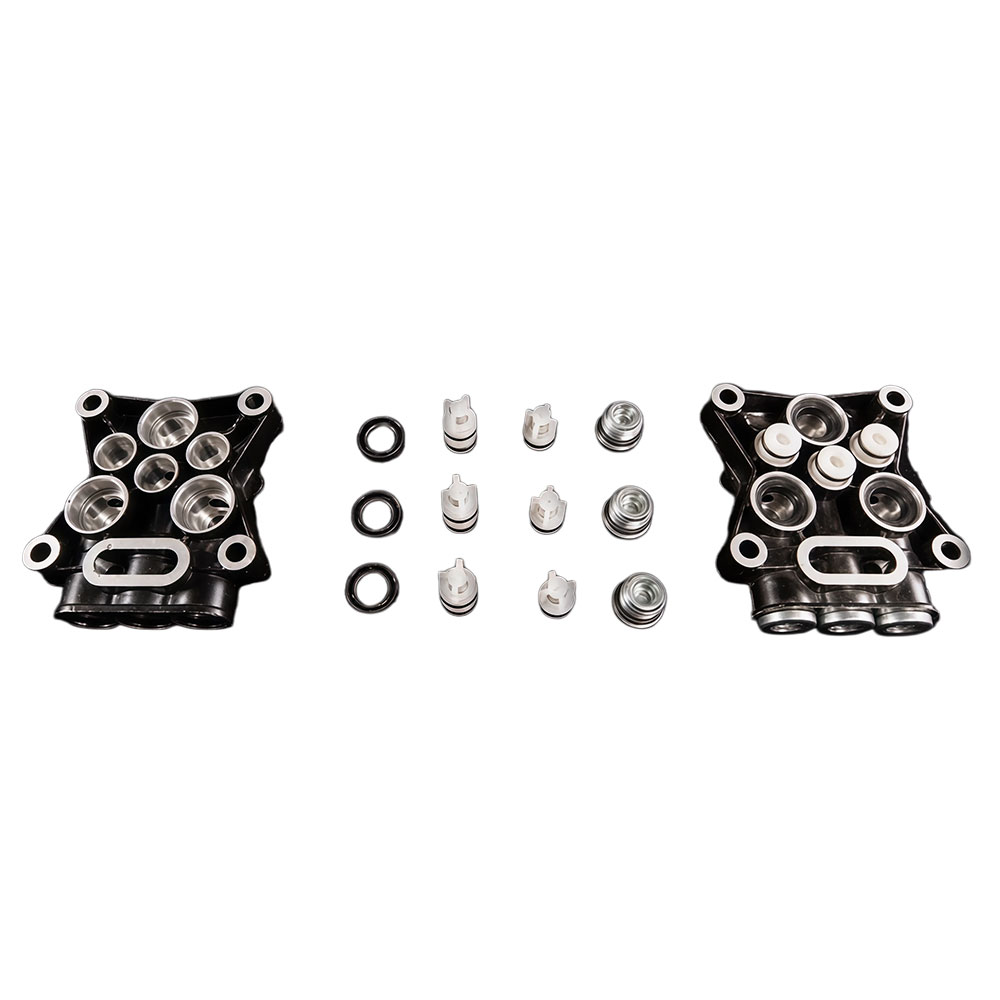
Automotive manufacturing demands rigorous IATF 16949 compliance. This standard ensures consistent quality management across global supply chains. Deep traceability remains a non-negotiable focus for plant managers. Systems utilize laser marking heavily to etch unique identifiers. RFID tracking follows components throughout their entire assembly lifecycle.
You must handle heavy, awkward sub-assemblies safely. EV battery modules and steering columns require robust robotic lifters. A major risk factor involves strict cycle time adherence. Your custom machine must perfectly match broader plant takt times. A delay of three seconds creates a massive bottleneck downstream.
Precision components demand absolute perfection from automation equipment. You must maintain strict micro-tolerances constantly. Cleanroom compatibility dictates specialized machine design. Engineers must adhere to strict ISO class ratings, such as ISO Class 7.
Electrostatic discharge (ESD) protection prevents catastrophic circuit failure. The primary risk factor involves handling extremely fragile items. Medical device internals break easily under pressure. Micro-electronics suffer from invisible surface defects easily. You must manage these handling processes flawlessly. Incorporating soft-touch grippers and vacuum end-effectors mitigates these critical handling risks.
Hardware production environments present incredibly harsh realities. High-durability tooling withstands immense physical punishment daily. Machines must handle abrasive metallic debris safely. Airborne metal dust destroys unprotected linear bearings quickly.
Ultra-high-volume continuous operation demands ruggedized components. Premature wear serves as your biggest mechanical risk factor. Standard pneumatic cylinders fail rapidly under heavy payload repetitive stress. Mechanical actuators require frequent preventative maintenance. You should specify oversized, heavy-duty components explicitly for these brutal environments. Sealing all electronic enclosures prevents particulate contamination effectively.
Implementation risks derail poorly planned automation projects easily. You must conduct Proof of Principle (PoP) studies early. This involves conceptual testing of your most high-risk assembly step. Engineers usually build a temporary benchtop rig for this purpose.
It verifies core feasibility before full machine fabrication begins. We strongly advise testing novel joining methods upfront. Testing advanced vision algorithms early is equally crucial. This proactive measure prevents expensive, time-consuming redesigns during the final build phase.
Acceptance testing provides objective performance verification. The Factory Acceptance Test (FAT) occurs at the vendor facility. You must define objective, measurable success criteria clearly. For example, mandate a 99% yield over a 4-hour continuous dry run.
The Site Acceptance Test (SAT) happens on your plant floor. Clarify the transition of responsibility carefully between teams. The SAT validates performance under real-world facility conditions. It confirms utility connections and operator ergonomics. Successfully completing the SAT initiates the final commissioning and training phase.
Modern manufacturing relies on seamless, rapid data flow. You must evaluate how the machine's PLC communicates externally. It needs to integrate smoothly with existing ERP and MES platforms. Protocols like SCADA and MTConnect facilitate this critical data exchange.
However, connectivity introduces significant cybersecurity threats. You must connect systems without exposing the operational technology (OT) network. Implement strict hardware firewalls and isolated subnets. We recommend following NIST cybersecurity frameworks closely. This protects your production facility from devastating external security vulnerabilities.
Selecting the right engineering partner determines your ultimate success. Assess the vendor's vertical integration capabilities immediately. Do they design and machine custom tooling in-house? Heavy outsourcing impacts project lead times negatively.
It also diminishes strict quality control oversight. Fully integrated vendors pivot faster when engineering changes occur. They control their internal manufacturing schedules tightly. This translates directly to reliable delivery dates and superior build quality.
Protect your operational independence fiercely during negotiations. Ensure the delivery of comprehensive technical documentation upon project completion. You need several vital assets to maintain control:
Complete, accurate mechanical drawings in standard CAD formats.
Detailed electrical and pneumatic schematics for troubleshooting.
Fully unlocked PLC source code with clear annotations.
Proprietary locked code creates dangerous vendor lock-in. It forces you to pay exorbitant fees for minor software tweaks. Clear intellectual property ownership protects your long-term equipment investment.
A newly commissioned machine requires ongoing technical support. Look closely at Service Level Agreements (SLAs). You should seek absolute guarantees on remote diagnostic capabilities. Secure remote access allows vendor engineers to troubleshoot faults instantly.
Demand clear preventative maintenance schedules upon delivery. Spare parts availability timelines matter immensely. A missing proprietary actuator can halt production for weeks. Ensure your integrator stocks critical spares domestically. Rapid technical support minimizes unscheduled downtime dramatically.
An Automatic Assembly Machine is a bespoke engineering partnership. It is never a simple commodity purchase. The lowest upfront bid often results in disastrous long-term financial losses. Overlooking critical integration risks leads to chronic production downtime. You must prioritize engineering excellence and lifecycle reliability over initial sticker price alone. Carefully evaluating motion architectures, joining technologies, and software security guarantees operational success.
Advise your engineering team to take immediate, structured action. Begin your procurement process intelligently. First, develop a highly robust User Requirement Specification (URS) document. Outline every precise tolerance, cycle time, and material constraint clearly. Next, request comprehensive PoP studies for your most complex assembly operations. Finally, establish strict FAT and SAT acceptance protocols. This proactive, data-driven approach guarantees a highly successful automation deployment.
A: Project timelines vary based on system complexity. Standard timelines typically range from 12 to 24 weeks. Integrating specialized robotics or custom vision systems can extend this schedule. Supply chain availability for specialized components also impacts delivery. Furthermore, conducting robust Proof of Principle (PoP) testing adds upfront time but saves weeks of downstream troubleshooting. Clear communication accelerates the design phase significantly.
A: The standard industry expectation for a return on investment falls between 18 and 24 months. You achieve this payback through several compounding factors. Drastic labor savings reduce daily operating expenses immediately. Significant scrap reduction minimizes wasted raw materials. Increased production throughput maximizes daily revenue generation. Combining these elements creates a highly favorable financial math equation for most manufacturing facilities.
A: Yes, provided you implement flexible automation. Fixed or hard tooling resists major modifications. In contrast, modern modular systems handle product lifecycle changes effectively. They rely heavily on interchangeable end-of-arm tooling (EOAT). Reprogrammable PLCs allow operators to adjust motion profiles quickly. Robotic cells adapt seamlessly to new geometries. Planning for future adaptability during the initial design phase ensures your machine remains relevant.


