

Views: 0 Author: Site Editor Publish Time: 2026-09-09 Origin: Site
Production managers inevitably face a critical bottleneck when scaling manufacturing. The ceiling of sequential machining fundamentally restricts pure volume output. While standard CNC equipment offers unmatched flexibility, pushing millions of units annually through traditional setups often destroys margins. You lose critical profitability to excessive labor, wasted floor space, and rigid cycle time limitations. Scaling output blindly often compounds existing inefficiencies. You need precise data to justify facility upgrades.
To break this production ceiling, you must rethink your machining architecture entirely. This guide provides a strict, ROI-focused evaluation framework for high-volume manufacturing. We will help you determine exactly when the heavy capital expenditure of a rotary transfer system financially outperforms adding more standalone units. You will learn the mechanical differences, floor space implications, and precision capabilities of each approach. Ultimately, you can align your equipment strategy directly to your multi-year production contracts.
Volume dictates the architecture: Rotary transfer excels exclusively in high-volume, low-mix environments (typically 500,000+ parts/year), whereas CNC remains the gold standard for high-mix, low-to-medium volume.
Sequential vs. Simultaneous: A standard CNC Machining Center processes one tool/operation at a time; a Rotary Transfer Machine executes multiple operations simultaneously across specialized stations.
Hidden implementation costs: Transitioning to rotary transfer requires significant upfront engineering, custom workholding, and specialized operator training, offset only by extreme reductions in cost-per-part at scale.
Floor space consolidation: One 12-station rotary machine can often replace 4 to 8 traditional CNC machines, drastically altering facility footprint and labor requirements.
Outgrowing a traditional machining setup presents clear, painful symptoms on the factory floor. Spindle idle time becomes a massive liability. Every second a machine spends changing tools is a second it cuts no metal. Excessive part handling eats into shift productivity. Operators constantly load and unload raw materials across disconnected workstations. Unmanageable labor costs compound rapidly across multiple shifts. You hire more technicians merely to keep pace with demand, shrinking your profit margins.
We must standardize the baseline. A standard CNC Machining Center operates sequentially. It excels at rapid changeovers. Operators can quickly swap fixtures and load new programs. This provides unmatched prototype-to-production flexibility. However, it relies on one spindle working at a time. The spindle mills, retracts, swaps tools, and drills. These sequential movements add up.
Eventually, you hit the volume threshold. Cycle times under 10 seconds become physically impossible on standard equipment. Tool change indexing and single-spindle physical limits cap your maximum throughput. Adding more standalone machines only multiplies your inefficiencies. You double your floor space requirements. You double your maintenance schedules. You double your labor overhead. You reach a distinct break-even point where traditional machining becomes financially unviable for mass production.
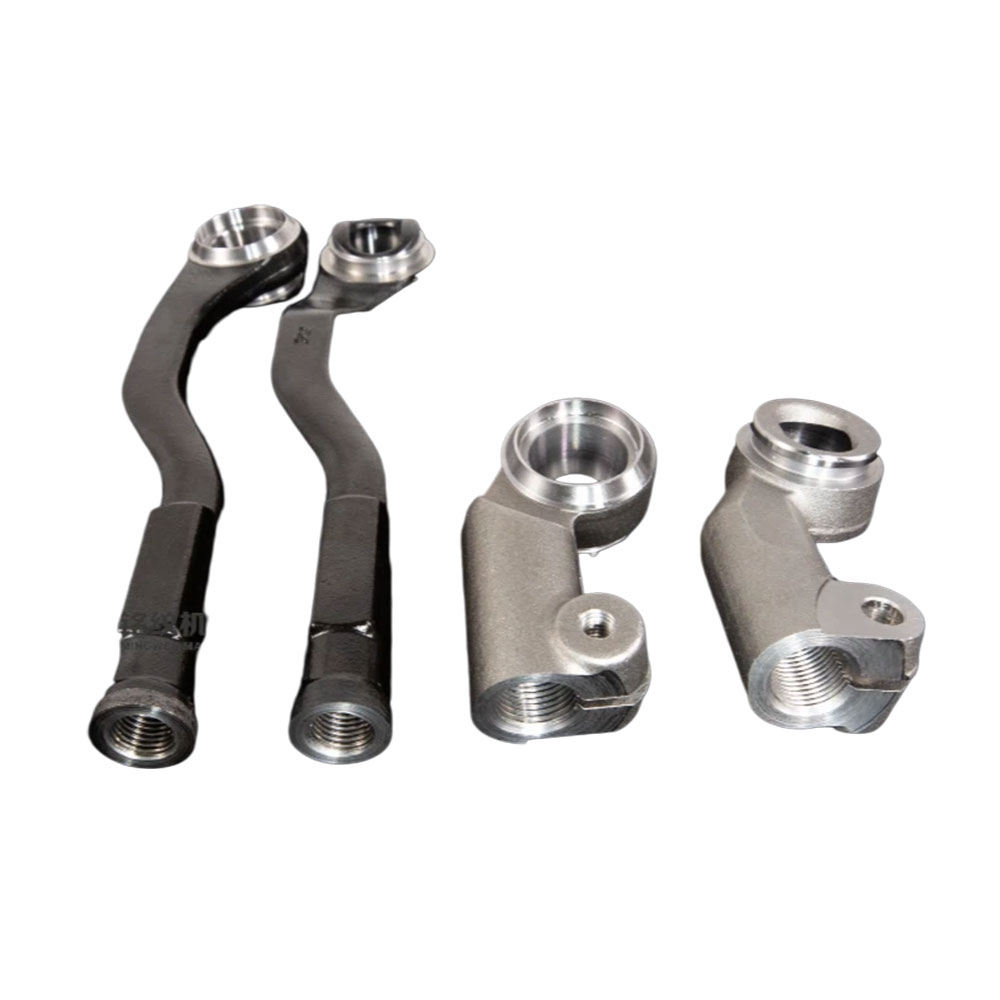
Understanding the fundamental engineering differences between these systems clarifies their distinct applications. We classify solutions by how they handle the workpiece and apply cutting tools.
A typical CNC Vertical Machining Center (VMC) is highly accessible. It remains cost-effective for most job shops. However, gravity bottlenecking limits its efficiency. Chips fall back onto the workpiece during pocket milling. You need constant coolant blasts to clear the cutting zone. Furthermore, sequential tool changes add seconds to every single part produced.
Alternatively, a CNC Horizontal Machining Center (HMC) provides superior chip evacuation. Gravity pulls chips away from the tool path. Operators use tombstone fixturing for higher volume runs. You can load multiple parts onto one fixture block. Yet, the core process remains fundamentally sequential. The spindle must still address each feature one after another.
Rotary systems completely abandon the single-spindle concept. They utilize a large central indexing table surrounded by multiple independent cutting stations. The machine loads a raw blank at station one. It then indexes to the next station. Station two mills a face while station one loads a new blank.
This multi-station architecture allows simultaneous operations. Cycle time is dictated only by the single longest operation. It does not equal the sum of all operations. If a deep drilling operation takes 8 seconds, and all other cuts take 4 seconds, a finished part drops every 8 seconds.
Manufacturers also deploy variant applications for specialized needs. A Horizontal Rotary Transfer Machine fits specific complex tasks. It handles deep hole drilling beautifully. It excels at complex chip evacuation. Factories frequently use horizontal variants for managing heavy bar stock or extrusions directly from a feeder.
Procurement engineers must balance three distinct dimensions before authorizing new equipment. You must weigh cost-per-part reductions against massive capital expenditures.
Rotary machines require massive upfront CapEx. They demand custom engineering and specialized workholding design. Standard CNCs are highly commoditized and relatively inexpensive. Let us frame the ROI math through a hypothetical break-even calculation.
Imagine a complex brass valve body. It requires 60 seconds on a standard CNC. Your burdened labor rate sits at $30 per hour. The labor cost equals $0.50 per part. A custom rotary system slashes this cycle time to 6 seconds. The machine produces 600 parts per hour instead of 60. The labor cost drops to $0.05 per part.
Over a 2,000,000-unit annual contract, you save $900,000 in labor alone. The massive reduction in cost-per-part recoups a hypothetical $1.5M capital expense in under two years. This calculation drives all high-volume procurement decisions.
Skeptics often doubt multi-station accuracy. Moving a part across 12 different spindles seems detrimental to tight tolerances. However, modern systems hold exceptional tolerances.
Today's CNC-controlled rotary systems utilize advanced probing. They feature active thermal compensation. They easily achieve full OD (outside diameter) turning between centers. You can expect micron-level repeatability. This precision often matches or exceeds dedicated Swiss-style lathes.
Industrial real estate carries a heavy premium. Expanding a facility to house more machines destroys capital. Contrast the requirements of both systems.
To match the output of one 6-second rotary machine, you might need 10 standalone VMCs. Ten VMCs require massive floor space. They require ten operators per shift, or complex robotic integration. One rotary system requires a fraction of the square footage. It requires one trained operator to manage raw material feeds and monitor tooling wear.
Metric | Multiple Standard CNCs (VMC/HMC) | Rotary Transfer System |
|---|---|---|
Cycle Time Determinant | Sum of all operations + tool changes | Single longest operation only |
Floor Space | High (requires multiple machine footprints) | Low (consolidated single footprint) |
Labor Needs | Multiple operators across shifts | One dedicated specialist operator |
Initial CapEx | Low to Medium (scalable over time) | Extremely High (requires upfront investment) |
Despite the incredible throughput advantages, rotary systems carry strict limitations. You must evaluate the risks objectively.
Rotary transfer is a major liability for high-mix shops. Standard equipment transitions between totally different parts in hours. You swap the vise jaws, load a new program, and touch off the tools.
Rotary machines penalize changeovers heavily. Tooling changes take days. Station alignments require intense precision. Reprogramming 12 synchronized stations demands careful engineering. If a client frequently revises part designs, a rotary system becomes a massive financial anchor.
Common Mistake: Purchasing a multi-station system for contracts spanning less than two years. The setup and engineering time will consume your entire profit margin.
Standardized setups offer built-in redundancy. If one machine crashes, you move the job to another available unit. Production slows, but it never stops entirely.
Multi-station systems create a single point of failure. If one spindle goes down, the entire line stops. You cannot bypass station number four. Preventative maintenance becomes absolutely critical. You must monitor vibration, tool wear, and coolant quality obsessively.
Finding basic machine operators is moderately difficult. Finding technicians capable of troubleshooting 12 synchronized stations is nearly impossible.
You face a severe workforce skill gap. Ubiquitous operators cannot easily step into this role. They must understand complex PLC integration, simultaneous multi-axis motion, and advanced hydraulic clamping. Specialized operator training is mandatory. You must build training costs directly into your initial budget.
Best Practice: Partner with the machine OEM for a comprehensive, multi-week training program at your facility before entering full production.
Procurement engineers need a strict decision framework. Use this logic to dictate your next capital investment.
Choose Standard CNC Systems if:
Your production runs stay under 100,000 units annually.
Part designs are subject to frequent revisions or engineering changes.
Your CapEx budgets are strictly phased and require incremental scaling.
You manufacture a high mix of different components daily.
Facility floor space is not a limiting factor.
Choose Rotary Transfer Systems if:
Production strictly exceeds 500,000 to 1,000,000+ units annually.
The component design remains permanently locked for 3 to 5 years.
Reducing cycle time by mere seconds yields massive annual cost savings.
Facility real estate prevents adding more standalone equipment.
You can secure guaranteed long-term purchasing contracts from your clients.
If your volumes justify advanced systems, you must prepare precise data. Do not guess your cycle times.
First, prepare a comprehensive time-study of your current baseline process. Second, gather detailed part-prints including all critical tolerances. Third, engage an OEM application engineer directly. Provide them your data and request a custom tooling runoff. Demand an accurate, legally binding cycle-time guarantee before signing any purchase orders.
The choice between sequential and simultaneous machining is rarely about finding a universally "better" machine. It requires aligning your mechanical architecture directly with your business strategy. High-volume, multi-year contracts demand the sheer output of synchronized stations. Conversely, agile job shops must retain the flexibility of standalone units.
You must calculate your break-even point meticulously. Factor in floor space, labor rates, and exact cycle times. Do not ignore the hidden costs of specialized maintenance and complex changeovers. Evaluate your multi-year part-mix strategy honestly.
We encourage you to request a custom cycle-time analysis today. Send your highest-volume part print to a trusted manufacturer. A professional tooling runoff will reveal exactly how much profit sequential machining currently drains from your operation.
A: Setup times for a multi-station system range from several hours to several days. You must synchronize fixtures, align multiple stations, and calibrate custom workholding. Conversely, standard equipment takes mere minutes to a few hours. This massive difference emphasizes the need for long, uninterrupted production runs on rotary systems.
A: Yes. Modern systems utilize advanced probing, active thermal compensation, and rigid cast-iron bases. They easily hold extremely tight tolerances. Many manufacturers achieve micron-level repeatability and perform full outside diameter (OD) turning between centers seamlessly.
A: The automotive, plumbing, valve manufacturing, ammunition, and custom hardware sectors benefit immensely. Any industry requiring millions of identical, moderately complex components relies heavily on this technology to drive down unit costs.
A: Yes. Advanced hybrid machines now incorporate multi-axis articulating stations. You can perform complex 5-axis milling inside the rotary environment. However, adding multi-axis articulation significantly increases the total system cost and programming complexity.


