

Views: 0 Author: Site Editor Publish Time: 2026-09-02 Origin: Site
High-volume manufacturing presents a relentless challenge. You must balance extreme production throughput against tight tolerances and complex geometries. Engineers constantly seek ways to maximize output without sacrificing precision. Rotary transfer machines execute simultaneous machining operations across multiple indexing stations. They index parts rapidly through dedicated tooling zones to drastically slash cycle times. Finding the right part profile is the critical first step before investing capital into transfer machine technology. You will learn exactly which components fit this process best. We will explore key evaluation criteria for part geometries. You will also discover how to match specific parts to horizontal or vertical machine architectures.
Volume dictates viability: RTMs are typically reserved for production runs exceeding 100,000 to 500,000+ units annually, though modern CNC variants are lowering this threshold.
Complexity thrives here: Parts requiring multiple simultaneous operations (milling, drilling, tapping, turning) in a single setup are ideal candidates.
Orientation matters: Selecting between a Vertical or Horizontal Rotary Transfer Machine depends heavily on blank type (bar stock vs. castings) and chip evacuation needs.
Dedicated vs. Flexible: While legacy systems were rigid, the CNC Rotary Transfer Machine allows for family-of-parts production with reduced changeover times.
You need a rigorous evaluation process before selecting parts for this equipment. Production realities dictate whether a component makes economic sense. We rely on three distinct criteria to qualify parts for transfer machining.
Cycle Time Economics
Engineers must apply the "longest operation rule" during process planning. The total cycle time equals the longest single machining operation at any station. Ideal parts have balanced operation times. You achieve maximum efficiency when every station finishes its task almost simultaneously. If one deep-hole drilling step takes twenty seconds, the entire machine paces itself to twenty seconds. We often split long operations across multiple stations to optimize this pacing.
Volume vs. Setup Ratios
You must calculate the break-even point carefully. These machines require high initial capital expenditure. Tooling setup times are also significant. However, they deliver an ultra-low cost-per-part at scale. You typically need high annual volumes to justify the initial setup. Scale transforms the high barrier to entry into an unbeatable competitive advantage. Once configured, they outpace traditional machining centers by staggering margins.
Material Suitability
Material choice heavily impacts station pacing and tool wear. Free-machining materials like brass, aluminum, and mild steel run beautifully. They yield fast indexing times and excellent tool life. Challenging alloys like stainless steel and titanium require slower feeds. Tougher materials generate excessive heat and wear down cutting tools faster. We must adjust spindle speeds and coolant flow carefully when processing these demanding alloys to avoid burning tools out prematurely.
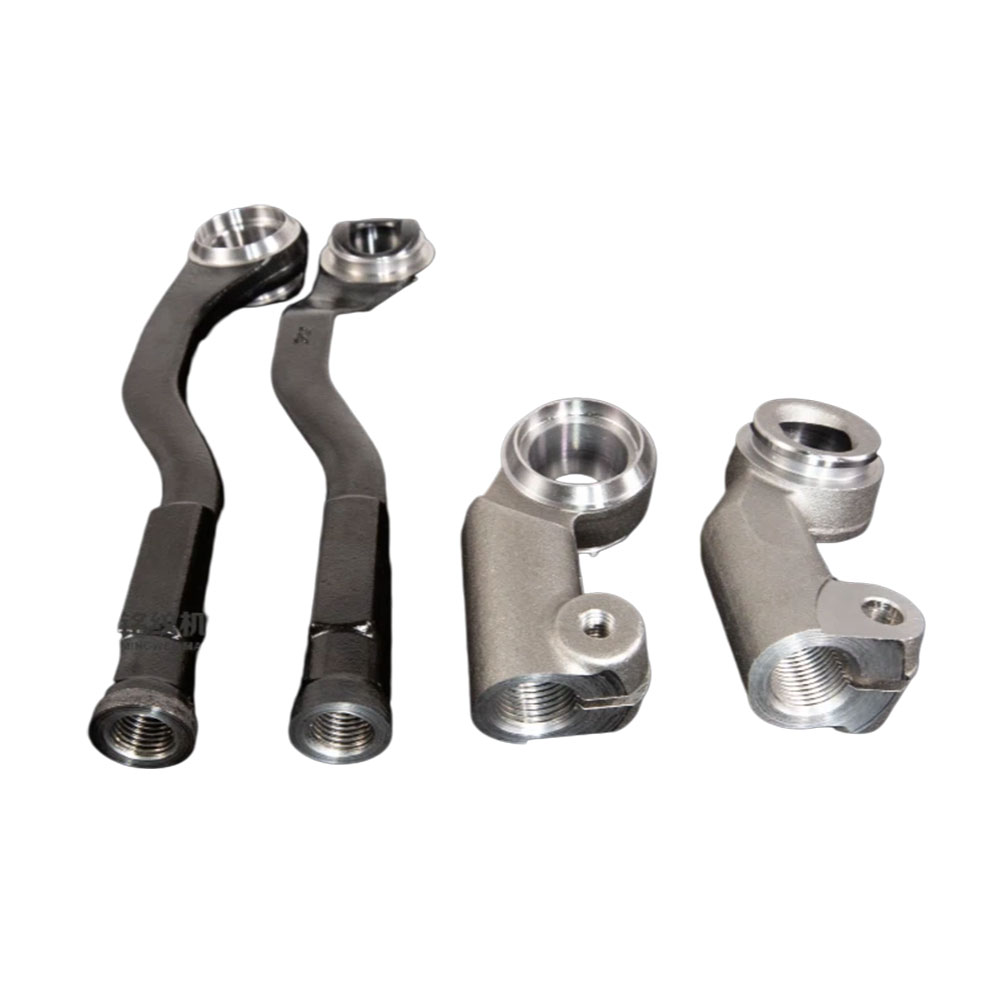
Certain industries rely heavily on transfer machining. You can easily spot ideal candidates by looking at these concrete examples. Components requiring multiple intersecting holes and milled surfaces shine in this environment.
Valve bodies and hydraulic blocks present unique manufacturing challenges. They require multiple intersecting cross-holes. You must maintain precise porting and tight threading. A dedicated Manifold Rotary Transfer Machine excels here. It allows you to drill and tap from multiple angles simultaneously. This process eliminates secondary operations completely. Engineers rely on these systems to guarantee the complex internal fluid pathways remain burr-free and perfectly aligned.
High-performance vehicles demand absolute precision. Connectors, brake caliper pistons, and fuel injection components are prime candidates. Automotive supply chains require high repeatability. Aerospace buyers demand zero-defect tolerances. A single setup guarantees dimensional stability across millions of parts. We machine sensor housings and ABS brake nodes continuously because the automated indexing prevents human loading errors.
The plumbing sector consumes massive quantities of brass fittings. Faucet valve cores, thermostat housings, and water meter bodies fit perfectly on these indexing tables. You need multi-axis machining capabilities to cut intricate internal geometries. High-volume outputs keep shelf stock replenished globally. We see incredible efficiency when machining brass bodies in one continuous cycle. The material chips easily, allowing spindles to run at maximum RPM.
Defense contractors produce parts in staggering quantities. Primer pockets, casings, and fuse bodies require rapid indexing. High-precision alignment is non-negotiable for defense applications. Transfer lines process these small, complex parts rapidly. They maintain strict military tolerances without slowing down production rates. Rigorous automated probing stations often verify part dimensions before they ever leave the machine.
Physical machine setup dictates production success. You must differentiate between primary architectures to specify the correct equipment. Blank material and part shape drive this crucial decision.
Engineers often choose the Horizontal Rotary Transfer Machine for specific raw materials. It works best for bar stock feeding. Coil-fed raw materials also run smoothly through horizontal setups. You should specify this architecture for long, cylindrical parts. It is ideal for operations where tools rotate while the workpiece remains completely stationary. The horizontal axis simplifies bar feeding mechanisms significantly. It allows continuous, uninterrupted raw material loading from automated magazines.
Chucked parts demand a different approach. The Vertical Rotary Transfer Machine handles castings and forgings effortlessly. Gravity provides distinct advantages in a vertical orientation. You get superior chip evacuation as metal shavings fall naturally away from the cutting zone. Coolant flow reaches deep cavities much easier. This advantage becomes critical for deep-hole drilling or heavy milling operations. The vertical design also integrates seamlessly with robotic loading arms for raw castings.
Machine Architecture Comparison Chart
Feature | Horizontal Architecture | Vertical Architecture |
|---|---|---|
Ideal Raw Material | Bar stock, coil-fed materials | Castings, forgings, chucked parts |
Part Geometry | Long, cylindrical parts | Complex, multi-sided blocky parts |
Chip Evacuation | Standard clearing mechanisms | Gravity-assisted, highly efficient |
Primary Advantage | Continuous automated bar feeding | Superior coolant access for deep holes |
Modern flexible manufacturing bridges the gap left by legacy cam-driven systems. Traditional machines operated via rigid mechanical linkages. Today, advanced controls redefine what these systems can achieve.
The CNC Rotary Transfer Machine fundamentally changes batch size economics. Servo-driven stations allow for "family of parts" machining. You can program slight variations without rebuilding mechanical cams. This flexibility brings the minimum economical batch size down drastically. We now see runs of tens of thousands instead of millions. Manufacturers can pivot production schedules rapidly to meet fluctuating supply chain demands.
Traditional cam machines struggle heavily when processing non-standard shapes. Modern controls integrate 3-axis and 5-axis interpolations directly at individual stations. You can mill complex contours and off-center features easily. This capability opens doors for intricate medical devices and sophisticated sensor housings. Each station acts like an independent, miniature machining center synchronized perfectly to the main index table.
We must look transparently at setup times. CNC is undeniably faster to change over than legacy cam-lines. However, it still requires rigorous tooling preset routines. Operators must qualify every tool meticulously. You cannot compare it directly to a standard vertical machining center (VMC). A VMC swaps out single parts quickly. Transfer systems require orchestrated adjustments across ten or more stations simultaneously. You must allocate proper engineering time to optimize these changeovers.
You must evaluate exactly when *not* to use a Rotary Transfer Machine. Building trust requires a balanced, skeptical look at alternative technologies. Every machine shop faces unique geometric and financial constraints.
We constantly compare tool capacity and part length capabilities. Swiss machines dominate when turning long, slender parts. They support the material right behind the cutting tool to prevent deflection. Conversely, transfer setups dominate multi-sided, blocky components. They handle highly featured short parts much faster than a Swiss lathe ever could. If your part length exceeds its diameter by a massive margin, skip the transfer machine and buy a Swiss lathe.
Multi-spindle automatics index rapidly and turn parts exceptionally well. However, we must consider index times and available tool stations. Transfer lines typically offer significantly more independent stations. You need these extra stations for complex hole-making, cross-drilling, and off-axis tapping. Multi-spindles hit a hard ceiling when part complexity involves heavy, off-center milling operations.
You must address chip management bottlenecks proactively. High-speed cutting generates massive volumes of metal chips quickly. Your coolant filtration systems must handle this heavy burden without clogging. Specialized operator training remains an absolute necessity. Unskilled operators will crash these complex systems, causing catastrophic damage. Finally, you face the risk of spindle downtime. If one station faults, it halts the entire production line. Independent CNC cell setups do not suffer from this specific vulnerability.
These indexing systems are not general-purpose tools. They serve as specialized assets designed exclusively for high-volume, multi-feature parts. When deployed correctly, they outpace conventional machining centers exponentially.
Evaluate your part complexity carefully to ensure multiple operations can occur simultaneously.
Confirm your annual production volumes justify the initial setup and rigorous tooling qualification times.
Select your machine orientation based on your raw material—bar stock favors horizontal, while castings favor vertical architectures.
Conduct a formal time study and cycle-time analysis before making any purchasing decisions.
Provide a 3D CAD model and annual volume projections to a trusted integrator to calculate true manufacturing ROI.
A: These systems deliver exceptional repeatability. They typically hold tolerances within a few microns. The exact precision depends heavily on the specific workholding fixture, thermal stability, and closed-loop CNC feedback. Modern servo-driven stations continuously monitor and adjust positioning to maintain strict dimensional accuracy across large production runs.
A: Yes, you certainly can. Vertical architectures are specifically designed for this exact purpose. They excel at processing net-shape castings and forgings. Many modern setups incorporate robotic loading and unloading systems. This automation ensures castings are chucked accurately and consistently, speeding up the entire manufacturing process.
A: Part length is constrained by the physical size of the trunnion or central indexing table. These machines are usually limited to smaller, cubed dimensions compared to standard turning centers. If a part exceeds the swing clearance between indexing stations, it will crash. Long parts belong on Swiss lathes.
A: It features dedicated fluid-power capabilities. Engineers design them specifically for hydraulic blocks and valve bodies. They incorporate advanced multi-axis cross-drilling stations. You will also find specialized deep-hole chip clearing cycles. Standard machines lack the high-pressure coolant routing necessary for these deep, intersecting boreholes.


